
What to Ask Before Sending Ashes for a Memorial Keepsake?
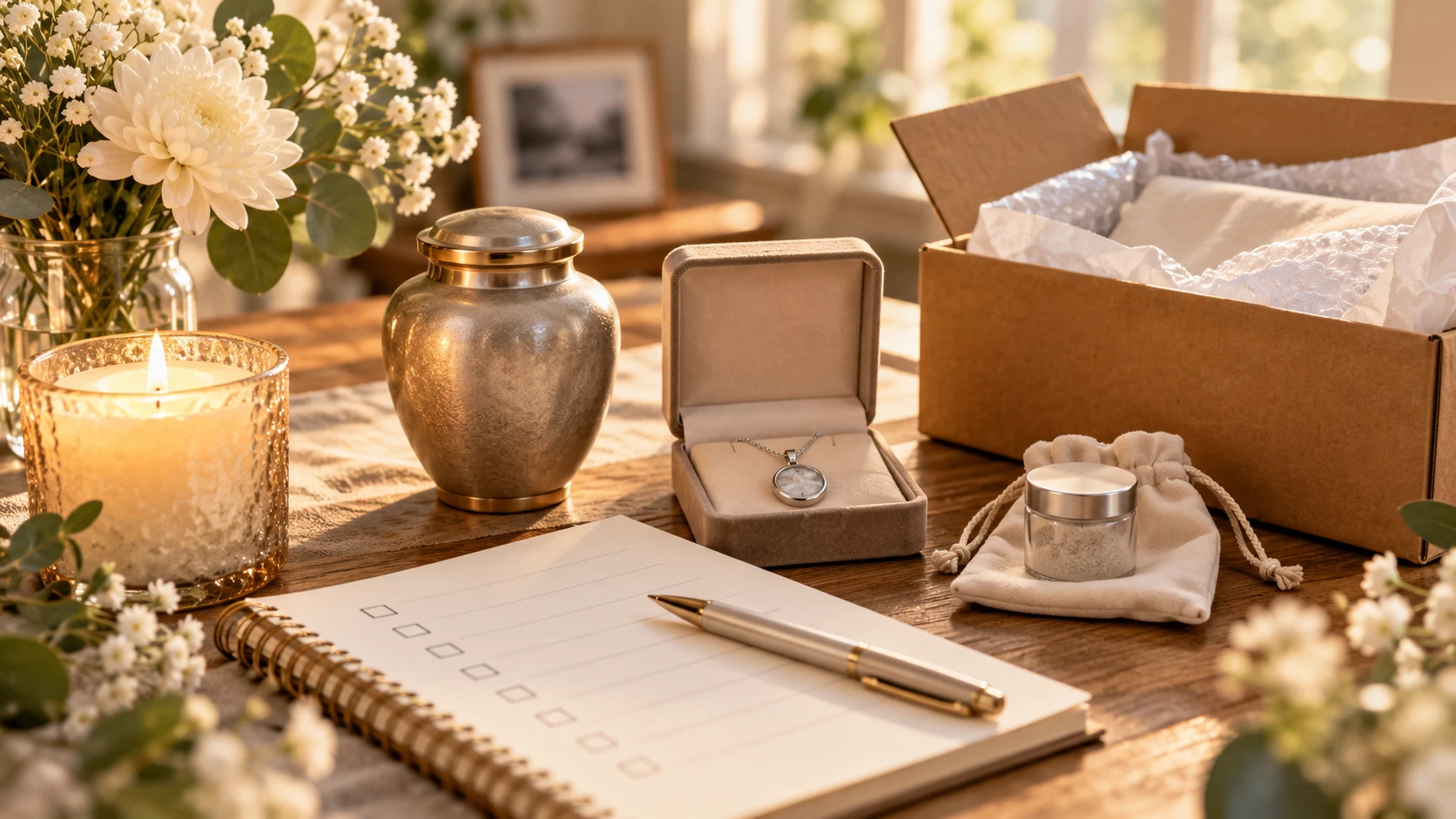
Creating a memorial keepsake from cremation ashes is a personal way to preserve the memory of someone who has passed away. Whether you are remembering a family member, partner, or beloved pet, transforming ashes into a tangible object carries considerable emotional significance. Unlike an ordinary personalized gift, a keepsake made from ashes involves irreplaceable material, making it important to understand the process before placing an order.
Today, specialized services offer different ways to preserve cremation ashes in jewelry, decorative stone from ashes, and other meaningful objects. At https://spogads.com/, you can explore contemporary approaches to remembrance. Those considering memorial keepsakes for ashes can compare available designs and choose a form that reflects their personal connection.
However, choosing a design is only one part of the decision. Before sending ashes to a memorial provider, it is essential to ask how the material will be handled, identified, processed, and returned. Understanding these details can help you select a trustworthy service and avoid misunderstandings.
Why Is It Important to Ask Questions Before Sending Cremation Ashes?
Cremation ashes cannot simply be replaced if they are lost, mixed with another person's remains, or used incorrectly during manufacturing. For many families, they represent one of the few physical connections remaining with someone they loved. This makes transparency and careful handling particularly important.
Memorial providers may use different production methods. Some place ashes inside a sealed compartment, while others incorporate them into glass, ceramics, resin, or specialized compositions. Certain processes permanently transform the material, making recovery impossible or impractical.
Before choosing a service, customers should understand what happens after the package arrives, who handles the ashes, and what safeguards protect them. A professional provider should explain these matters clearly without pressuring customers into immediate decisions.
How Are the Ashes Identified and Tracked Throughout the Process?
One of the most important questions concerns identification. When a business receives ashes from different customers, it needs a reliable system to ensure that each person's or animal's remains remain associated with the correct order.
Ask whether every submission receives a unique identification number and how that number remains connected to the ashes throughout manufacturing. Find out whether containers are labeled upon arrival and checked before processing.
Consider asking the following questions:
- Does every order receive a unique identification number?
- How are ashes labeled and stored after delivery?
- Are containers checked before manufacturing begins?
- How does the company prevent material from different orders being mixed?
- Will I receive confirmation when my ashes have been identified?
An identification system does not eliminate every risk, but it demonstrates that the company has established procedures for handling irreplaceable material. Providers should describe these procedures specifically rather than relying on general promises.
How Much Ash Is Needed to Make a Memorial Keepsake?
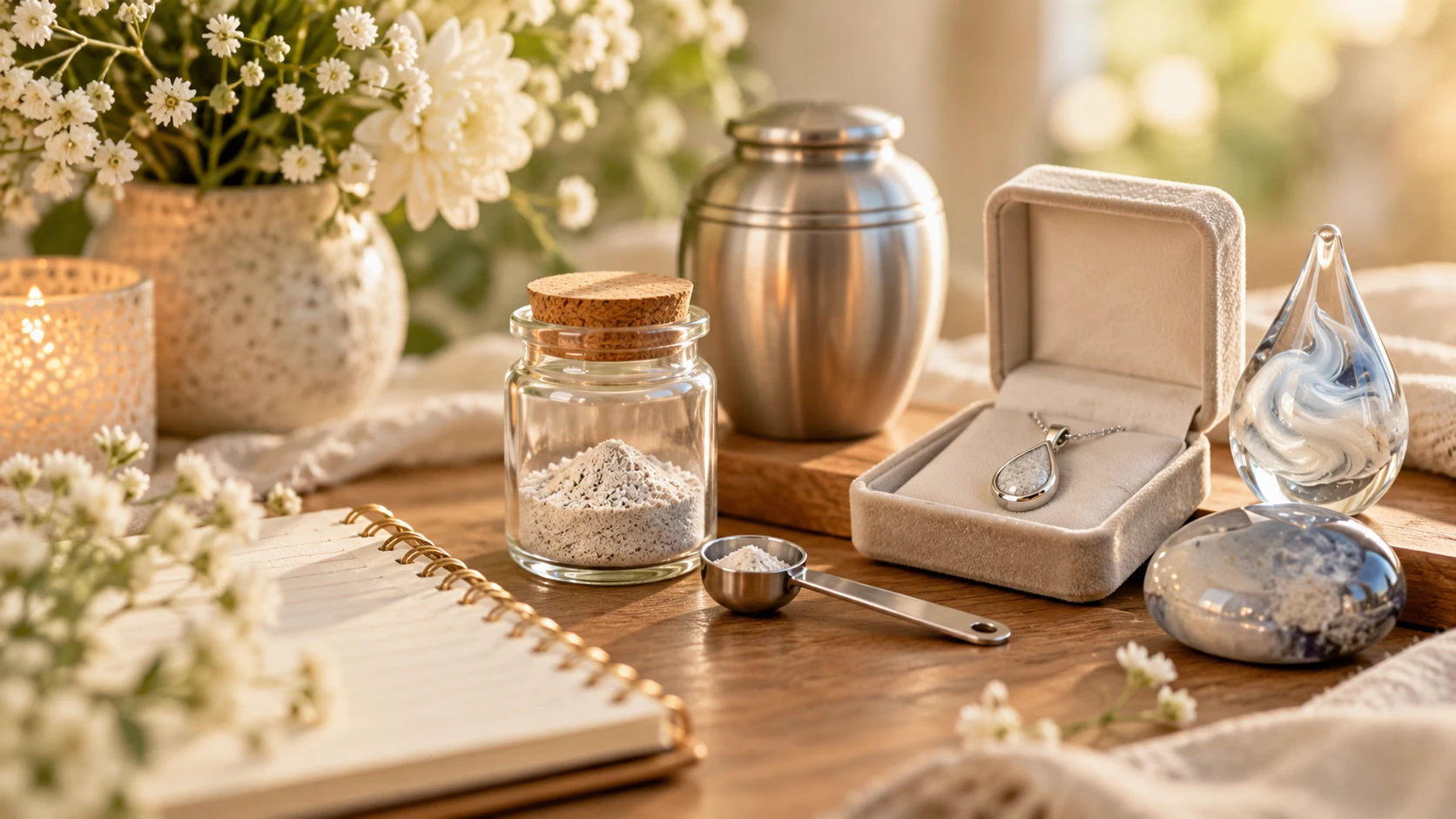
Different memorial products require different quantities of cremation ashes. A small pendant may need only a limited amount, while a larger decorative object may require substantially more. The exact quantity depends on the manufacturing method, dimensions, and composition.
Before shipping anything, ask the provider to specify the required quantity using a clear unit of measurement. Find out whether additional material is needed and what happens to any unused portion.
Families planning several memorial objects should calculate how much material each product requires. This is especially important when relatives want separate keepsakes or when some ashes must remain available for burial, scattering, or storage in an urn.
What Happens to the Ashes During Manufacturing?
The expression "made from ashes" can describe several production methods. Understanding the process helps customers determine how the ashes become part of the keepsake and whether they remain recoverable.
Are the Ashes Placed Inside or Incorporated into the Material?
Some memorial jewelry contains a sealed compartment holding a small portion of cremation ashes. In these products, the material remains separate from the surrounding metal or decorative elements.
Other keepsakes incorporate ashes directly into a material during production. Depending on the technique, they may be mixed into a composition, embedded in glass, or used during a specialized manufacturing process. Ask the company to explain exactly how the material is used.
Can the Ashes Be Recovered from the Finished Keepsake?
Some memorial containers allow access to their contents, although opening a sealed compartment may damage its closure. When ashes are permanently incorporated into another material, separating them afterward may be impossible.
This distinction matters if family members want to preserve the option of using the ashes differently in the future. Make sure you understand whether the chosen process is reversible before approving production.
Will Any Unused Ashes Be Returned?
Customers should establish what happens to every portion of the submitted material. If the provider uses less than the quantity received, ask whether the remaining ashes will automatically be returned or whether a separate request is necessary.
Clarify how unused ashes will be packaged and whether return shipping is included in the price. International orders may involve additional shipping requirements or documentation.
For processes that use all submitted material, request an explanation of how the ashes are incorporated into the finished object. These arrangements should ideally be confirmed in writing before shipment.
How Should Cremation Ashes Be Packaged for Shipping?
Proper packaging helps protect cremation ashes during transportation. Shipping companies handle parcels through sorting facilities and distribution networks, so containers must be secure enough to withstand ordinary handling.
Ask whether the memorial provider supplies a collection kit or requires specific packaging materials. If you prepare the shipment yourself, use a tightly closed container, appropriate protective packaging, and the identification details requested by the provider.
Confirm whether the original crematorium container can be used. Avoid transferring ashes unnecessarily, as repeated handling increases the possibility of accidental spills.
Finally, check whether an order form, identification label, or additional documentation must be included. Missing information may delay processing after the shipment arrives.
Which Shipping Methods Are Accepted for Cremation Ashes?
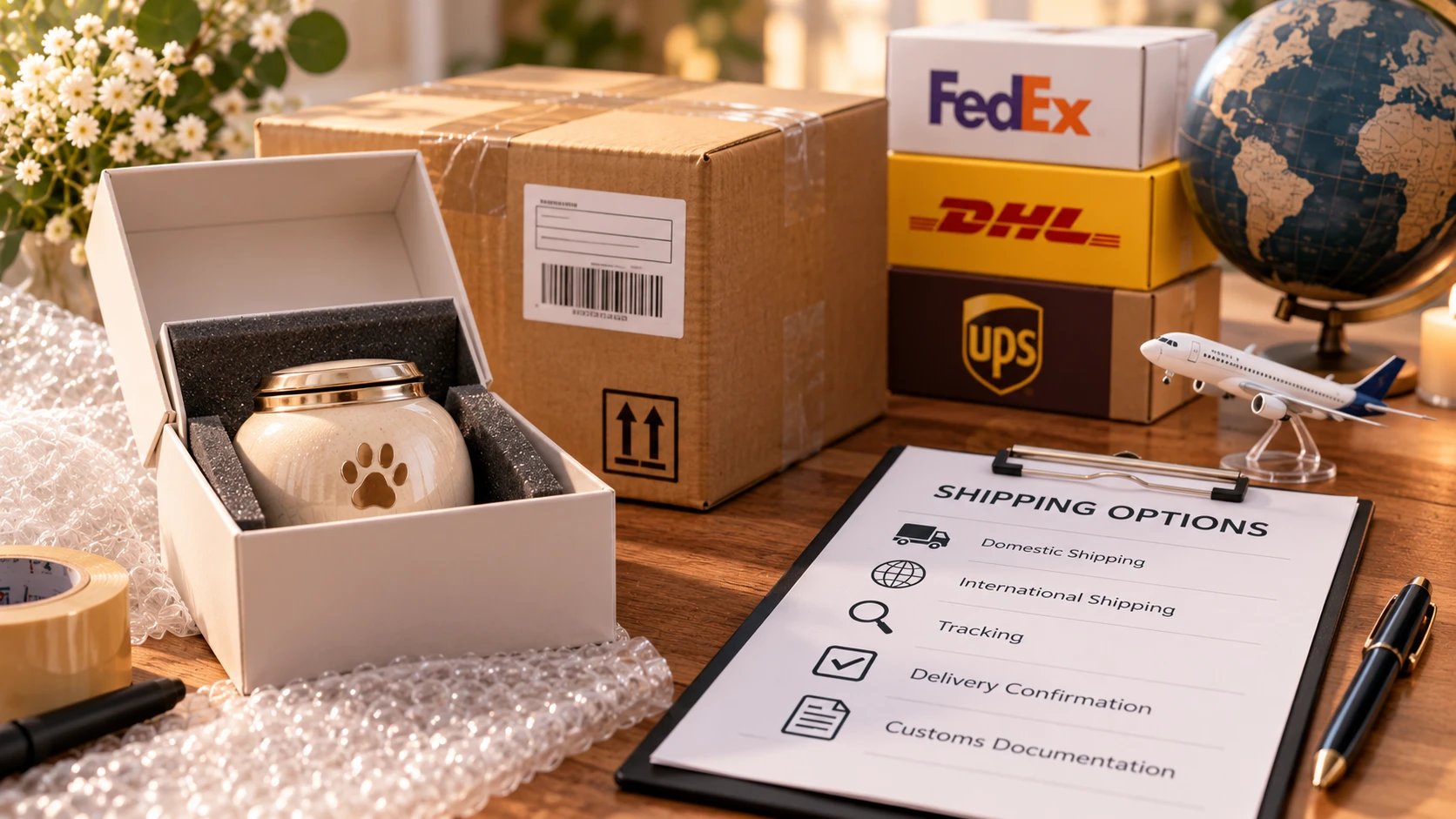
Not every courier or postal operator accepts cremated remains under the same conditions. Requirements vary depending on the carrier, destination, and whether the ashes are human or animal remains.
Before arranging transportation, confirm which shipping services the provider accepts. International shipments may require additional declarations, certificates, or customs documentation.
Several questions deserve attention:
- Which carriers accept the type of cremated remains being sent?
- Is tracking available throughout transportation?
- Is a signature required upon delivery?
- Are special documents or customs declarations necessary?
- Who pays shipping costs and potential customs charges?
- What happens if the package is delayed, damaged, or lost?
Tracking and delivery confirmation provide useful information but cannot eliminate transportation risks. Insurance policies may also exclude irreplaceable contents or sentimental value. Never describe the package inaccurately to avoid shipping restrictions.
Can the Provider Confirm That the Ashes Have Arrived Safely?
Sending cremation ashes away from home can be emotionally difficult. A clear confirmation procedure helps customers understand when the provider has received the material.
Ask whether the company sends an email or message upon delivery. Ideally, this confirmation should include the order number and indicate that the contents have been checked and identified.
Some providers may also offer updates during production. Remember that a courier notification only confirms delivery to an address, while a separate message from the manufacturer can confirm that the ashes have entered its internal identification system.
Who Will Handle the Ashes and Where Will the Keepsake Be Made?
Not every business selling memorial keepsakes manufactures them in its own workshop. Some companies cooperate with independent artisans or specialized production facilities.
Ask whether the ashes remain at one location throughout manufacturing or are transferred between facilities. If external specialists participate, find out how the identification and handling procedures are maintained.
Outsourcing is not automatically a warning sign. However, the business accepting the order should be transparent about its responsibilities and explain how the material is protected at every stage.
How Long Will It Take to Create the Memorial Keepsake?
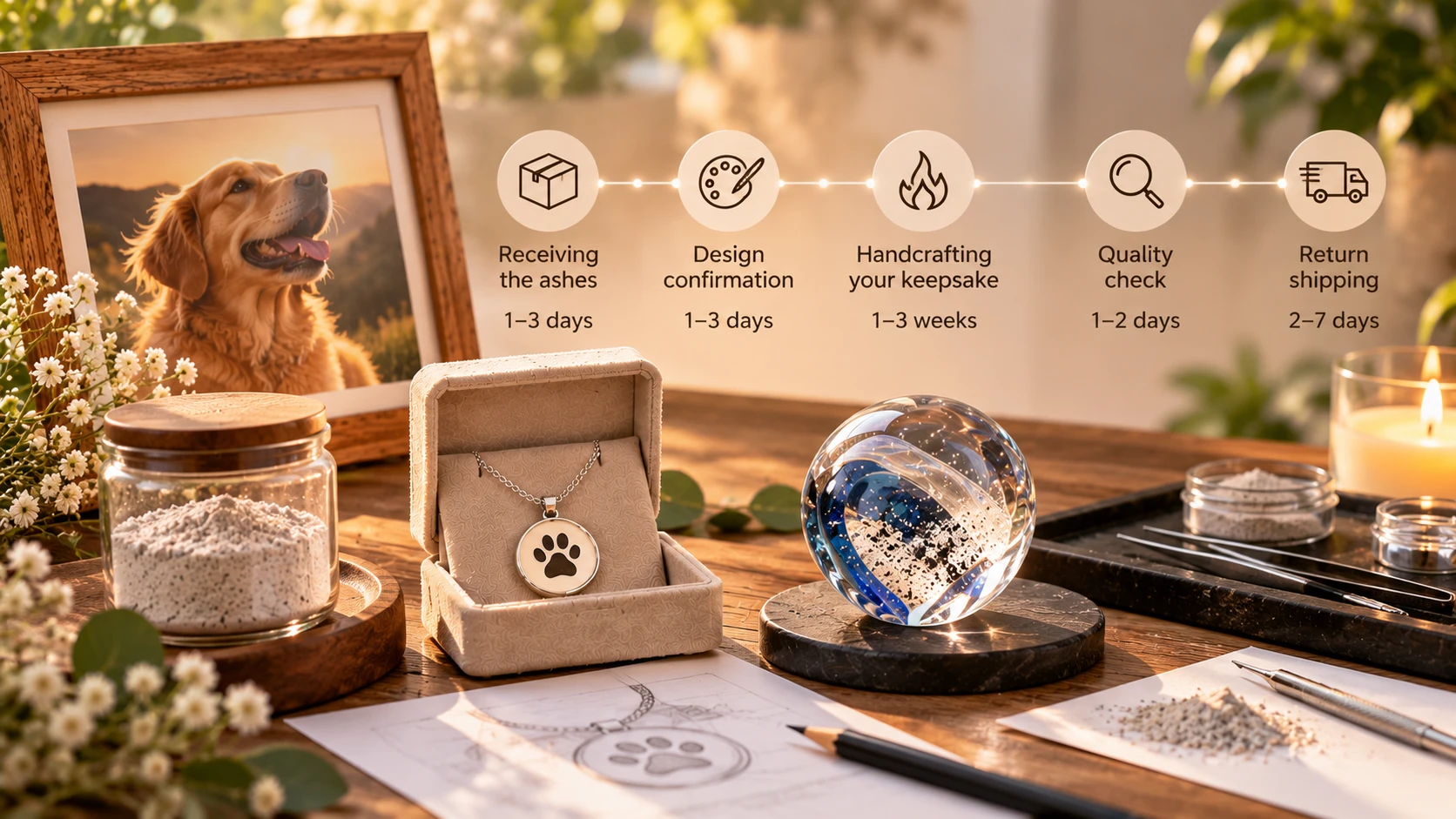
Production times depend on the design, manufacturing technique, materials, and level of personalization. Ask for an estimated timeline covering receipt of the ashes, production, quality checks, and return delivery.
For custom designs, clarify whether production begins when the order is placed or only after the ashes and approved design have arrived.
If the keepsake is intended for a memorial gathering or anniversary, communicate the date before ordering. Estimated completion dates should not be treated as guaranteed unless the provider explicitly confirms them.
Can the Finished Keepsake Be Personalized?
Personalization can make a memorial object more closely connected to the person or animal being remembered. Depending on the product, options may include names, dates, engraved messages, colors, shapes, or decorative elements inspired by photographs.
Will I See the Design Before Production?
Ask whether the company provides a sketch, digital preview, or another form of design approval. Check spelling, dates, measurements, and colors carefully before confirming the order. Corrections may become difficult once manufacturing begins.
Will the Finished Product Look Exactly Like the Photographs?
Handmade memorial objects may display natural variations in color, texture, and pattern. Materials incorporating ashes can also differ in appearance depending on the production process.
Ask which characteristics are consistent and which may vary. Product photographs should illustrate the design, but they may not represent every possible finished result.
What Quality Checks and Guarantees Does the Provider Offer?
A memorial keepsake is often intended to last for many years, so durability and construction quality deserve attention. Ask what materials are used and whether they are suitable for the intended purpose.
Jewelry designed for everyday wear may require different materials and protection than a decorative object displayed at home. Find out whether the manufacturer checks finished products for structural defects and compliance with the approved design.
Review any guarantee carefully. Ask what it covers, how long it lasts, and whether repairs are possible when the product contains cremation ashes. Manufacturing warranties may not cover accidental damage, ordinary wear, or improper cleaning.
What Happens If the Keepsake Is Damaged or the Order Goes Wrong?
Unexpected problems can occur during production or transportation. Before ordering, ask what happens if the keepsake is damaged, fails a quality inspection, or arrives with a defect.
Determine whether repairs are possible and whether a replacement would require additional ashes. A product containing removable ashes may offer different repair options from one in which the material has been permanently incorporated.
Review the provider's policy on incorrect personalization, delivery damage, and missing shipments. Ask how quickly problems must be reported and what evidence is required.
Because financial compensation cannot replace the emotional significance of cremation ashes, preventive procedures are particularly important.
What Are the Full Costs and Cancellation Conditions?
The advertised price may not include every expense. Additional charges can arise from personalization, shipping, protective packaging, taxes, or special design requests.
Request a breakdown of the total cost before payment. For international orders, clarify whether customs charges or additional documentation expenses may apply.
Cancellation terms are especially important for personalized memorial products. Some providers allow changes before manufacturing begins but restrict cancellations after production starts.
Ask whether deposits are refundable and what happens to the ashes if an order is cancelled. Applicable consumer rights depend on the jurisdiction and circumstances, so review the company's terms alongside relevant legal protections.
How Can You Evaluate Whether a Memorial Keepsake Provider Is Trustworthy?
Choosing a provider requires more than finding an attractive design. Because cremation ashes are irreplaceable, customers should consider the company's transparency, communication, and handling procedures.
Examine its website for clear descriptions of manufacturing methods, materials, delivery arrangements, and customer support. Customer reviews may provide information about communication, packaging, production times, and problem resolution, although individual experiences cannot guarantee future results.
Contact the provider before purchasing. Ask specific questions about identification, unused ashes, and manufacturing methods. Be cautious if the company avoids explaining its procedures or pressures you to send material before receiving essential instructions.
What Should You Confirm Before Sending the Ashes?
Once you have selected a provider and design, review the arrangements one final time. A simple checklist can help ensure that important details have not been overlooked.
- The selected keepsake, approved design, and personalization details.
- The exact quantity of ashes required.
- The identification and tracking procedures.
- The receiving address and accepted shipping method.
- The packaging instructions and required documents.
- The arrangements for returning unused ashes.
- The estimated production and delivery schedule.
- The total price and cancellation conditions.
- The procedure for reporting damage or delivery problems.
- The contact details for questions during manufacturing.
Keep copies of the order confirmation, correspondence, shipping receipt, and tracking information. If several family members are involved, ensure that everyone responsible for the ashes understands how much material will be sent and whether the process is irreversible.
Is It Necessary to Send the Ashes Immediately?
There is usually no need to rush simply because cremation has recently taken place. Properly contained ashes can be stored while you consider different memorial options.
Some people prefer to create a keepsake soon after a loss, while others need time to reflect, discuss the decision with family members, or select an appropriate design.
If you are uncertain, ask whether you can choose a design now and arrange production later. Taking time to make an informed decision does not diminish the significance of remembrance.
Conclusion
Sending cremation ashes to create a memorial keepsake deserves careful consideration. Before ordering, ask how the material will be identified, stored, processed, and protected. Clarify the required quantity, shipping arrangements, unused ashes policy, production timeline, and available guarantees.
A trustworthy provider should explain its procedures clearly and help you understand both the possibilities and limitations of the chosen product. Transparent communication matters especially when the materials cannot be replaced.
Whether you are considering memorial jewelry, a decorative stone, or another personalized object, compare the available options and ask questions before sending anything. A thoughtfully chosen keepsake can become a lasting symbol of remembrance and preserve a meaningful connection with someone whose memory remains important.

Social Plugin